Bat Removal for Homes and Buildings Across the Triangle
Chirping in the ceiling at dusk, droppings on the porch, a bat in the bedroom. We find every gap the colony is using, move the bats out the legal way, seal the building, and clean up what they left.
Meet Joe Zets and the Crew Behind Triangle Bat Removal
Triangle Bat Removal is the bat division of Integrated Wildlife Management, owned by Joe Zets and run out of Raleigh. Joe and his crew handle the inspection, the exclusion, the repairs, and the attic cleanup themselves, so the people who find the problem are the people who fix it.
Read their Google reviews and the same things come up again and again: Joe calls back fast, gives a straight answer about the warranty, and his crew shows you photos of the gaps you can't see from the ground. That's the whole approach. No scare tactics, no mystery, just a sealed building.
- You talk to Joe or his crew, not a call center
- Inspection, exclusion, repair, and cleanup in-house
- Exclusion work backed by a warranty
Bat Services for Triangle Homes and Buildings
Six services, all about one animal. We get bats out, keep them out, clean up after them, and handle the big buildings too.
Hearing bats in the attic? Let's talk today.
What Makes Triangle Bat Removal Different
Bat work happens on your roofline and inside your attic. You should know exactly how it's done and who's doing it.
We look past the hole you found
The gap you watched bats leave from is rarely the only one. Seal it alone and the colony moves down the roofline or into the house. We inspect the whole building.
We work with North Carolina's calendar
Pups can't fly from May through July, and state rules bar evictions then. We inspect and plan in summer so your exclusion starts the week it's legal.
Big roofs are normal work for us
Campuses, churches, office buildings, warehouses, condos, and multi-level buildings. More roof means more planning, not a different standard.
Cleanup is the same crew
When guano has soaked into insulation, we remove it and restore the attic. You don't hand the job to a second company halfway through.
Sources: NC Wildlife Resources Commission, CDC, and Integrated Wildlife Management's Google profile (September 2026).
Bats in North Carolina, in Plain Terms
North Carolina has 17 species of bats. Three are federally endangered and one more is federally threatened, according to the NC Wildlife Resources Commission. Most of them never come near a house. The few that do are why this company exists.
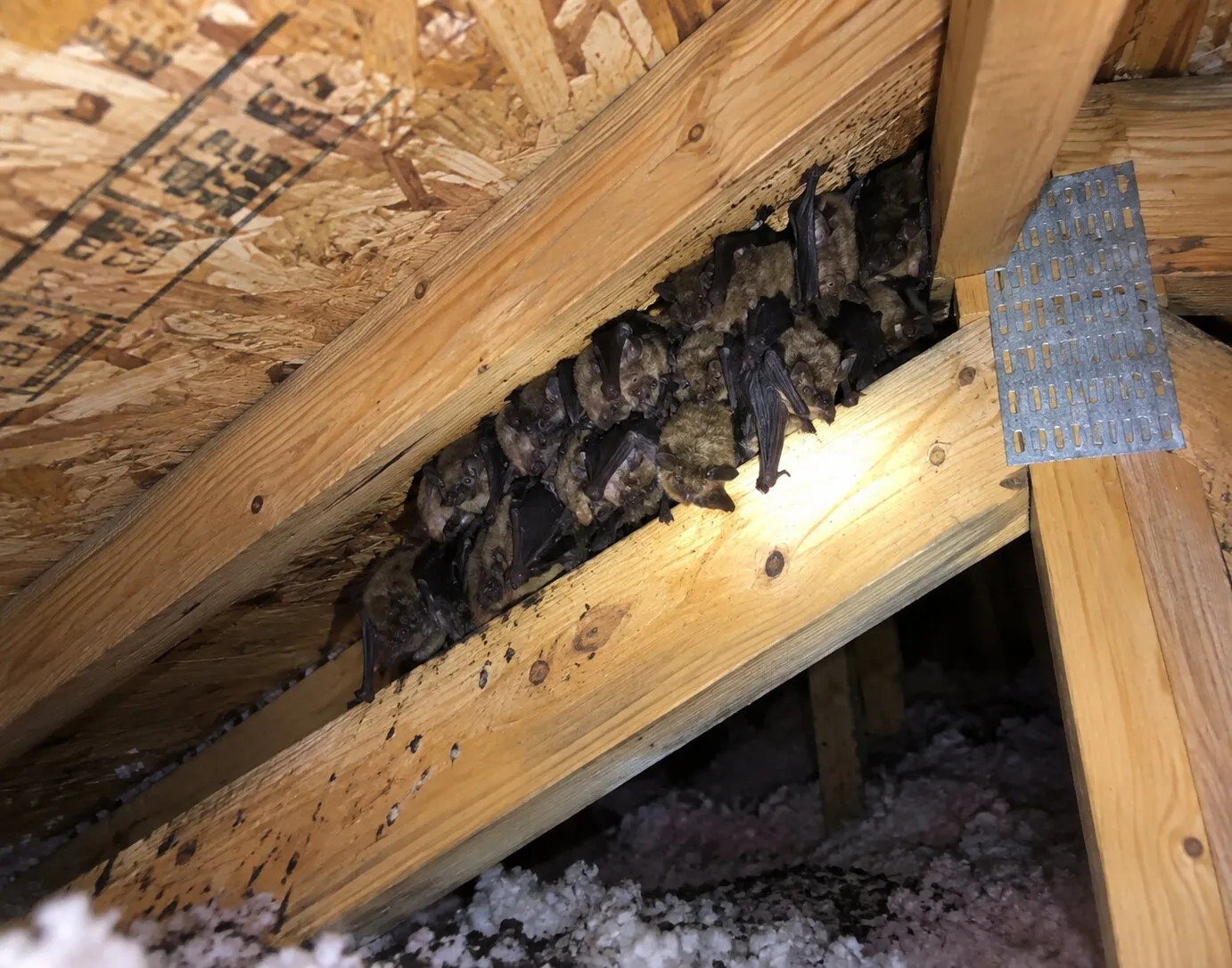
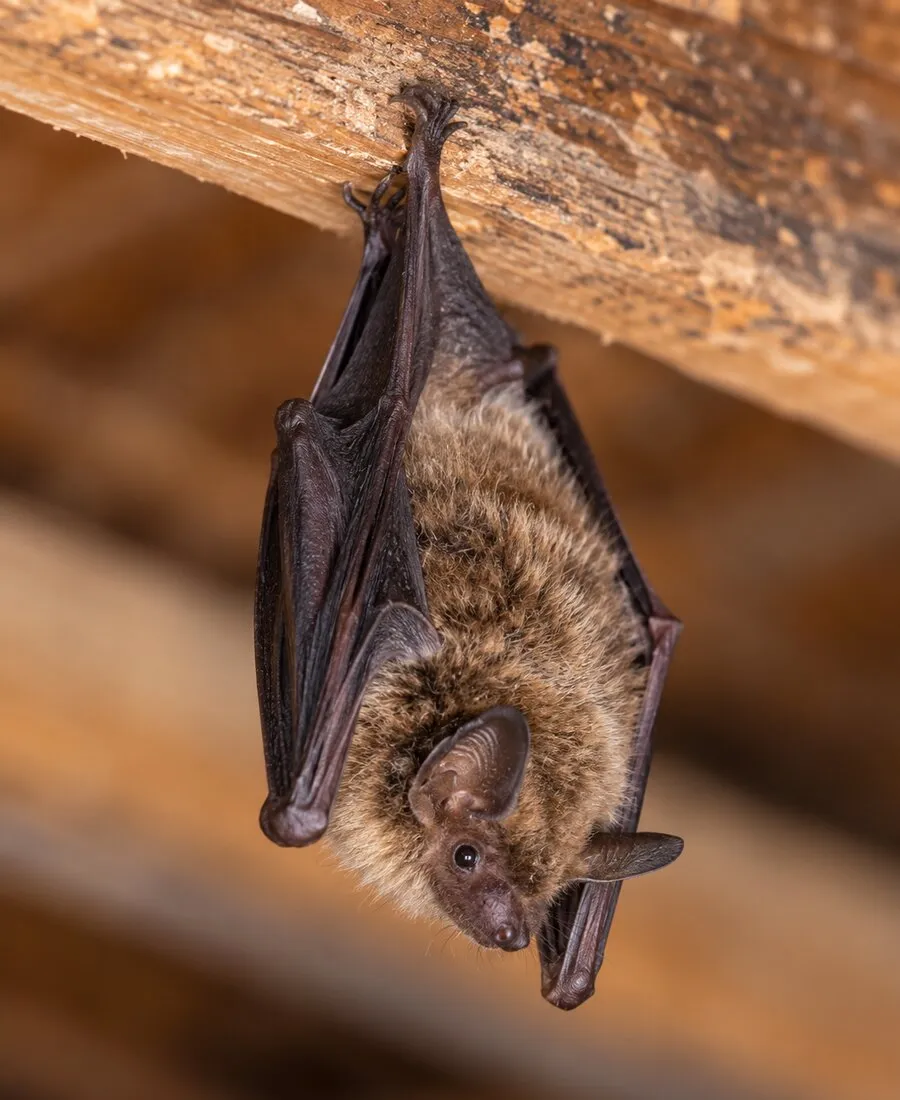
In the Triangle, the bats that end up in attics are mostly species comfortable in buildings: big brown bats, evening bats, and in some places Mexican free-tailed bats. They want a spot that’s warm, dark, and dry, and a pregnant female wants it badly in late spring. An attic, a wall void, or the space behind a soffit fits that description perfectly.
A single bat eats close to its body weight in insects every night. Nobody in our line of work wants bats dead. We want them out of your building and back to the trees and creeks where they belong.
The North Carolina Bat Calendar
- Spring: Bats return to summer roosts. Colonies often come back to the same attic, because females return to the same site when they can.
- May 1 to July 31: Pup season. North Carolina bars bat evictions in this window because young bats can’t fly for several weeks and would starve inside.
- August through April: Exclusion season, when a colony can legally be moved out and when most of our exclusions happen.
- Winter: Some bats hibernate in caves and mines; others ride out cold weather in buildings. A quiet attic in January doesn’t mean the problem left.
What We Look at on a Triangle House
The housing here runs from 1890s Victorians in Raleigh’s Oakwood and Durham’s Morehead Hill to subdivisions finished in the last few years in Holly Springs and West Cary. Older houses tend to have many small openings from aging trim, cornices, and a century of additions. Newer houses usually have one or two construction gaps, often at a soffit return, a dormer corner, or a gable vent, that nobody noticed until bats did.
Bats need less than you’d think. A gap about a quarter inch wide is enough. That’s why we inspect the whole roofline and the attic, not just the spot where you saw them leave. The full process is on our bat removal and exclusion page.
Health, Handled Calmly
Bats are a rabies vector species in North Carolina, though most bats don’t carry the virus. If a bat was in a room where someone was sleeping, or a pet or child may have touched it, don’t release it. Call your doctor or local health department first; they may want it tested. Our emergency bat removal page covers what to do in that moment.
Old guano is the other concern. It can carry the fungus that causes histoplasmosis, and sweeping or vacuuming it puts spores in the air. When a colony has been in an attic for a while, attic cleanup and guano removal is part of doing the job right.
From the First Call to a Sealed Building
Bats can't be trapped out or sprayed out. They have to leave on their own and find the door locked behind them. Here's the order we work in.
We inspect the whole building
We walk the roofline and go into the attic, looking for staining, droppings, and rub marks. The goal is every usable gap, not just the one you saw.
We seal the secondary openings
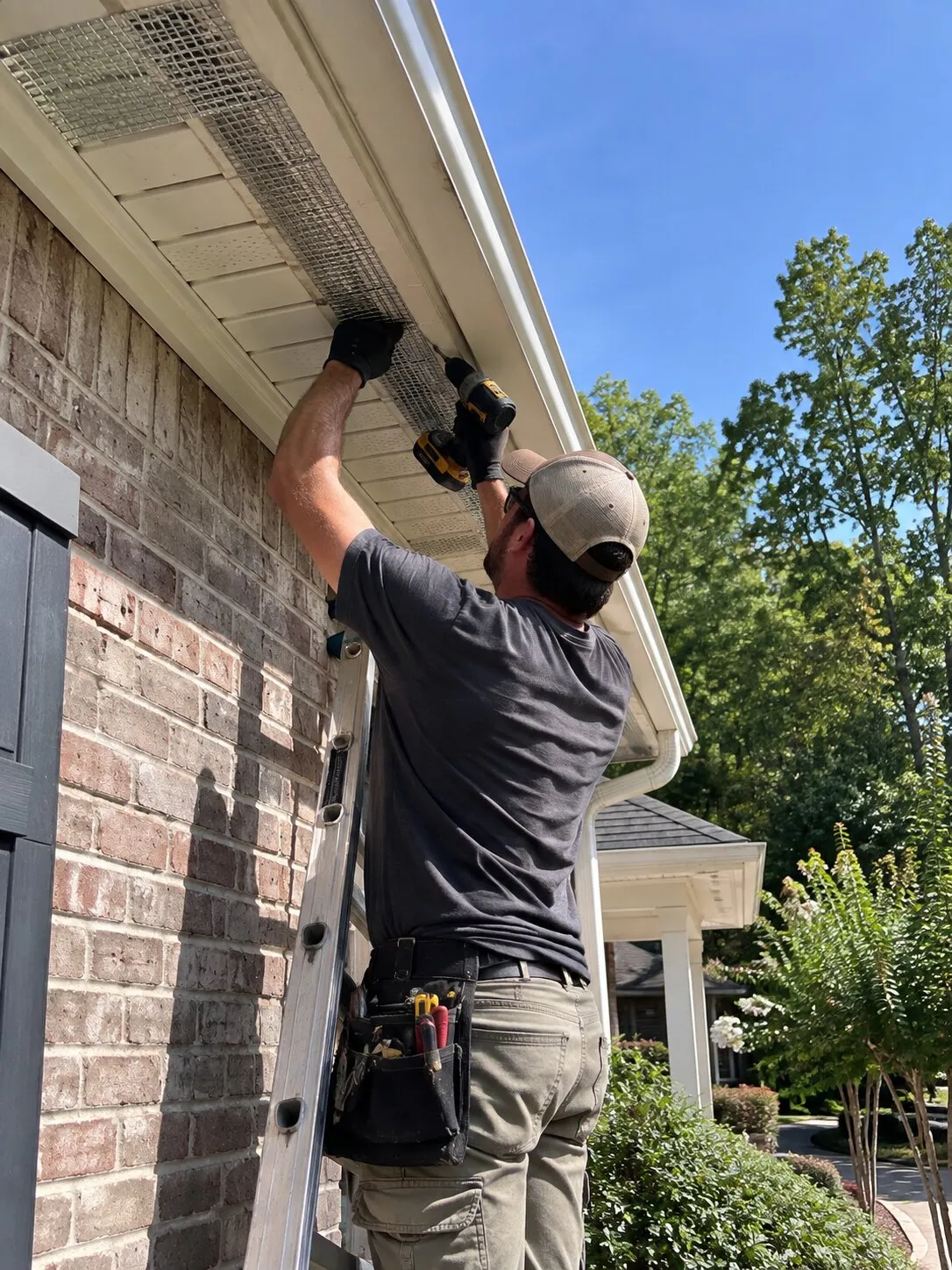
Gaps the colony isn't using get closed first, so the bats are left with only the openings we choose.
We install one-way exits
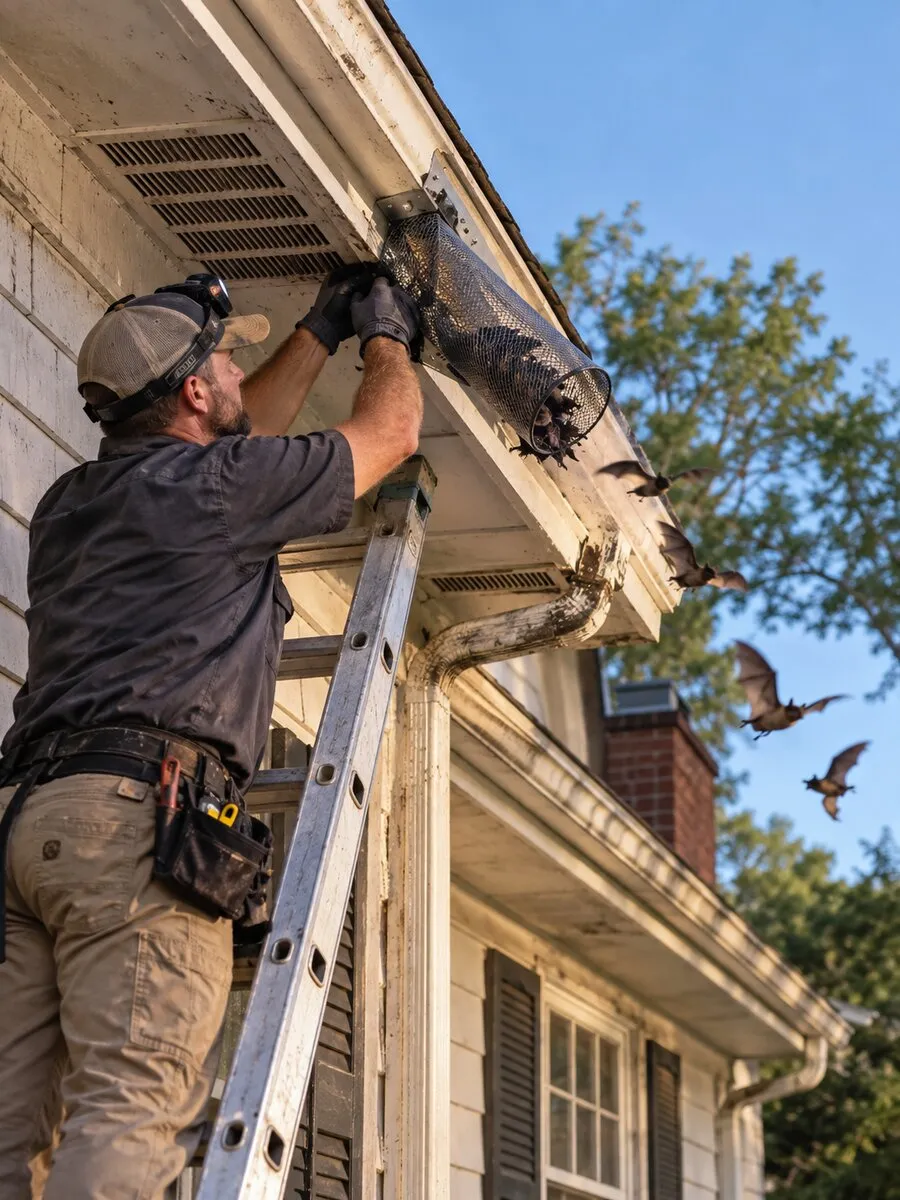
Exclusion devices go on the active openings. Bats fly out at dusk to feed and can't get back in.
We confirm and close
Once the building is clear, the last openings are sealed for good and the work goes under warranty.
Facts You Can Verify Before You Hire Us
Every line links to where you can check it.
What Triangle Homeowners Say About Joe's Crew
I cannot thank Joe and his team (Chris, Forrest, Mike & Grayson) enough for the work they put in for a successful bat exclusion and bat bug remediation. I reached out in June for noises I was hearing in the ceiling of my home office. They inspected very quickly & identified bats... They were able to close any other entry points, Chris fixed our exhaust vents and they successfully excluded the bats. They did a great clean up job & treated for the bugs twice.
Marian Morritt on Google
Mike from Integrated Wildlife Management came to my home recently to do an inspection of a bat colony that was roosting in one of our gable vents. He did a thorough inspection, pointed out some other entry points in our attic and gave a fair quote. He came back to do the removal and exclusion work this week and everything was done as promised. When I had a question about the warranty, Joe gave me a straightforward answer and addressed my concerns.
Peter Dooling on Google
Had an unexpected bat in our fireplace on a Saturday night at 5:30pm and a quick search led me Joe and the Integrated team. They had the bat out of the fireplace by 8:30pm and came back for a full inspection the next day! I was very impressed with their quick reply during weekend hours and their professionalism to get the job done right!
Nick H. on Google
What Triangle Homeowners Ask Us About Bats
Can you get the bats out this week?
It depends on the date. From May 1 through July 31, North Carolina bars bat evictions because pups can't fly yet. Outside that window we can usually get devices up soon after the inspection. Inside it, we inspect, seal what's safe to seal, and schedule the exclusion for August.
How do I know it's bats and not mice or squirrels?
Bats are quiet during the day and active around dusk, when you may hear chirping or fluttering. Their droppings crumble into a dry, glittery powder because they're full of insect parts; mouse droppings stay hard. The surest check is to watch the roofline at sunset and see whether bats come out of the house.
Is there a spray or repellent that works?
No. Ultrasonic devices, mothballs, and attic lights don't hold a colony out, and no poison is registered for bats. The lasting fix is a proper exclusion: one-way exits on the active openings and every other gap sealed.
Do you kill the bats?
No. Exclusion lets the bats leave on their own at night and keeps them from getting back in. North Carolina's eviction rules exist to protect bats, and several species here are federally endangered.
Do you work on commercial buildings?
Yes. The crew has done college campuses, office buildings, schools, churches, historic buildings, warehouses, condos, HOA properties, and multi-level buildings.
Is your work guaranteed?
Our exclusion work comes with a warranty. Joe goes over exactly what it covers when he gives you the quote.
What affects the price?
How many openings the building has, how high and steep the roof is, how much repair the gaps need, and whether the attic needs cleanup. The number of bats matters less than people expect.
What towns do you cover?
Raleigh, Durham, Chapel Hill, Cary, Apex, Garner, Holly Springs, Clayton, Wake Forest, Fuquay-Varina, Morrisville, and Knightdale, plus the communities in between.
Proudly Serving the Whole Triangle
Wake, Durham, Orange, and Johnston counties, from Chapel Hill and Durham out to Clayton and Wake Forest. Our office is on Chapel Hill Road in Raleigh.
Durham County
Orange County
Johnston County
Hearing Something in the Ceiling at Dusk?
(984) 246-0981Request a bat inspection- You'll talk with Joe Zets or his crew, not a call center
- Exclusion work backed by a warranty
- Homes, churches, campuses, and commercial buildings
- Emergency help when a bat is inside